A Comprehensive Guide to Rebound Adjustment for UTV Owners

Updated: Mar 21
Understanding Rebound Adjustment in UTVs
If you ride a Polaris Ranger or RZR, Can-Am Defender or Maverick, Yamaha Wolverine, Kawasaki Ridge or Teryx, Honda Pioneer, or CF Moto U-Force, you’ve probably encountered suspension packages that mention “rebound adjustment.”
But what does rebound adjustment actually do? Is it something your UTV truly needs? Let’s break it down clearly.
What Is Rebound Adjustment?

Rebound adjustment controls how fast your shock extends after it compresses. When your UTV hits a bump, rock, or uneven trail section, the process is as follows:
The shock compresses.
The spring stores energy.
The shock extends back to ride height.
Rebound adjustment fine-tunes how quickly that extension occurs. It’s one of the key differences between entry-level UTV shocks and performance-focused suspension systems.
Why Rebound Matters on Polaris, Can-Am, Yamaha & Other UTVs
Modern side-by-sides are heavier and more powerful than ever. Whether you’re trail riding a Polaris RZR, hauling gear in a Can-Am Defender, or navigating wooded trails in a Yamaha Wolverine, suspension control directly impacts:
Stability at speed
Rear-end kick in rough sections
Traction on uneven terrain
Cornering confidence
Rider comfort and fatigue
Without proper rebound control, even a quality spring setup can feel unstable.

What Happens If Rebound Is Too Fast?
If rebound is too soft (too fast), the shock extends too quickly after a bump. On machines like a Polaris Ranger or CF Moto U-Force, this can lead to:
A bouncy or “pogo” feel
Rear kick over whoops
Loss of traction
Unsettled handling
The machine feels nervous instead of planted.
What Happens If Rebound Is Too Slow?
Conversely, if rebound is too stiff (too slow), the shock does not extend quickly enough before the next bump. This can cause:
Suspension “packing up”
Harsh ride quality
Reduced usable wheel travel
Increased chassis stress
In rough terrain, these issues become noticeable very quickly.
Rebound vs. Compression — What’s the Difference?
These two adjustments are often confused.
Compression adjustment controls how the shock reacts when it compresses.
Rebound adjustment controls how it reacts after compression — when it extends.
Both adjustments work together. Proper balance between compression and rebound is crucial for UTV suspension stability and control.
Which Riders Benefit Most from Rebound Adjustment?
Rebound adjustment is especially valuable for:
Aggressive trail riders
Riders carrying passengers or cargo
Machines with added accessories or weight
Owners who switch between work and recreation
Anyone upgrading suspension on Polaris, Can-Am, Yamaha, Honda, Kawasaki, or CF Moto models
If you’re upgrading from stock suspension and want better rear control without stepping into a fully advanced multi-adjustable system, a mid-level performance package can be a smart move.
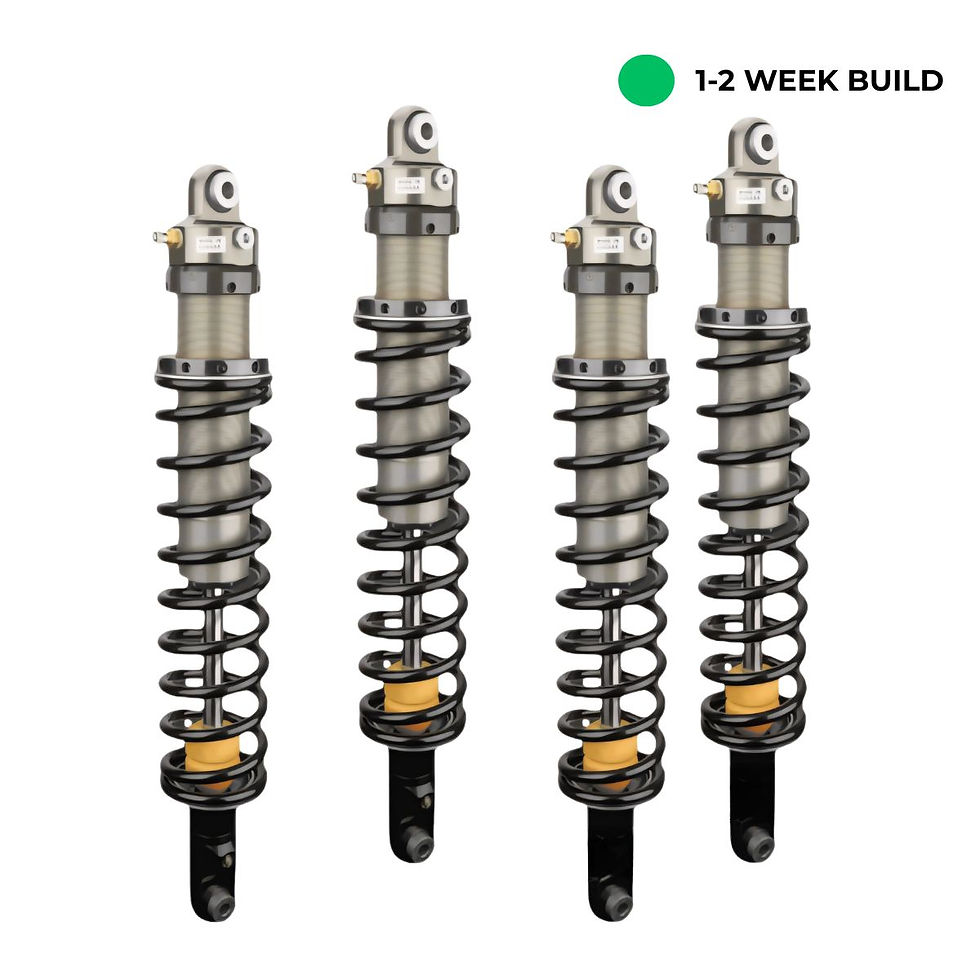
For example, our Black Label Performance•2 UTV shock package is designed for riders who want improved damping and stability for trail riding and mixed use, while keeping the setup straightforward and reliable. It offers enhanced rear performance over entry-level systems and is ideal for riders ready to move beyond factory suspension.

Where Rebound Adjustment Fits in Performance Suspension
As suspension stages increase, adjustability typically increases as well. Higher-level performance packages include additional tuning capability because they are built for riders who demand more control.
Top-tier systems, such as our Black Label Elite•4 suspension systems, incorporate advanced rear rebound adjustment. This allows riders to fine-tune how quickly the rear suspension recovers after compression, improving traction, stability, and predictability in aggressive terrain.
Rear rebound adjustment is especially important because the rear of most UTVs carries significant load — drivetrain weight, passengers, cargo, accessories, and bed weight all influence how the rear suspension behaves.
Being able to dial in rebound helps stabilize the machine under acceleration, braking, and rough trail transitions.

Choosing the Right Suspension Package
When comparing shock packages for your Polaris, Can-Am, Yamaha, Kawasaki, Honda, or CF Moto, don’t rely on stage labels alone. Ask:
Does it include rebound adjustment?
Is the adjustability front, rear, or both?
Is it tuned for my weight and accessories?
Is the system serviceable and rebuildable?
Understanding these details ensures you’re comparing real performance differences — not just marketing terminology.
The Importance of Rebound Adjustment in UTV Performance
Rebound adjustment is not merely a technical specification; it is a control feature that directly impacts how your UTV handles rough terrain, carries weight, and maintains traction.
Whether you’re upgrading a work-focused Ranger, a trail-ready Wolverine, a performance-driven RZR, or a utility U-Force, understanding rebound adjustment helps you choose the right suspension level for your riding style.
When it comes to UTV suspension, the details matter.