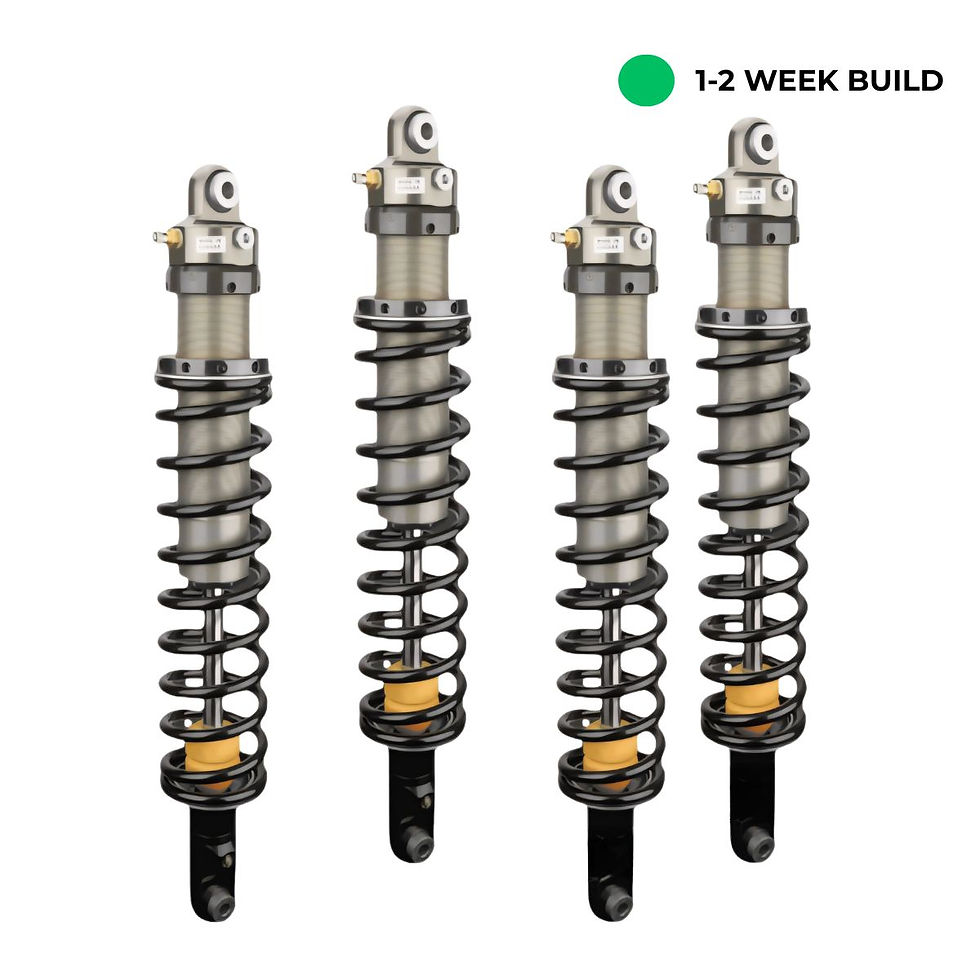
UTV Shock Preload Explained: Ride Height, Sag, and Ground Clearance

When setting up UTV suspension, one of the most misunderstood adjustments is shock spring preload. Many riders assume preload simply tightens the spring or that it only compensates for added weight. In reality, preload directly affects ride height, ground clearance, suspension stiffness, and how your UTV behaves on the trail.
Understanding how preload works is key to setting up suspension correctly. Most properly tuned suspensions use the least amount of preload necessary to achieve correct ride height and suspension sag. This allows the suspension to move freely while maintaining stability and traction.
At Bandit UTV Suspension, proper setup is the foundation of achieving better ride quality, improved control, and consistent off-road performance.

Quick Answer: Does Preload Increase Ride Height on a UTV?
Yes. Increasing preload compresses the suspension spring before the vehicle begins moving. That stored energy pushes upward on the chassis, which raises ride height and increases ground clearance.
However, too much preload reduces suspension droop and can make the ride harsher. Most properly tuned UTV suspensions aim for 20–30% sag, allowing the suspension to move both upward and downward for better traction and ride quality.
What Shock Preload Actually Does
Preload is the initial tension applied to a spring before the suspension begins to move. This tension is created by adjusting the spring collars on the shock.
When preload is increased, the spring is compressed slightly even while the vehicle is sitting still. That compression stores energy within the spring.
Because of that stored energy, the suspension requires more force to begin compressing.
In simple terms:
More preload = more stored spring energy
More stored energy = more upward force against the chassis
More upward force = increased ride height and ground clearance
When preload is reduced, the opposite happens. The spring carries less stored tension, allowing the vehicle to settle deeper into its suspension stroke and lowering ride height.
Preload Affects Every Type of UTV Spring Setup
The physics of preload apply to all suspension spring configurations.
Preload will raise ride height whether your shocks use:
A single linear spring
A dual spring stack
A true dual-rate spring system with crossover rings
In every case, preload increases tension in the spring stack, which pushes upward against the chassis.
While spring design influences how the suspension behaves throughout its travel, preload always affects ride height and initial suspension firmness.
Why Too Much Preload Hurts Suspension Performance
Although preload can raise ground clearance, excessive preload can create several problems.
When too much preload is added:
The suspension sits too high in its travel
Initial suspension movement becomes stiffer
Downward suspension travel (droop) is reduced
The vehicle struggles to follow uneven terrain
Instead of the wheels dropping into holes and ruts, the entire UTV tends to fall into them.
Good off-road suspension relies on the tires maintaining contact with the ground. That requires both upward compression travel and downward extension.
When suspension is heavily preloaded, the vehicle sits on top of the suspension with limited droop travel, which often results in a harsher ride and reduced traction.
Why Suspension Sag Is Important
This is why suspension professionals usually aim for 20–30% suspension sag.
Sag is the amount the suspension compresses under the weight of the vehicle and rider.
When sag is set correctly, the suspension sits near the middle of its travel, allowing it to:
Compress upward when hitting bumps
Extend downward when encountering holes or uneven terrain
This balance allows the suspension to absorb terrain efficiently and maintain traction.
Without sag, the suspension cannot extend properly. With too much sag, the suspension can bottom out too easily.
The goal is to find the balance where the suspension supports the machine while still allowing full movement in both directions.
Why the Least Amount of Preload Is Usually Best
Because preload increases stiffness and reduces droop travel, the best suspension setups typically use the minimum amount of preload needed to achieve proper ride height and sag.
This approach provides several benefits:
Improved ride comfort
Better traction over rough terrain
More usable suspension travel
More predictable handling
When suspension is balanced correctly, the wheels move with the terrain rather than fighting against it.
This is exactly what a properly tuned off-road suspension system is designed to do.
Every UTV Suspension Setup Is Different
While the general guideline of 20–30% sag works well for many machines, final suspension setup depends on several factors, including:
Vehicle weight
Accessories and added cargo
Rider and passenger weight
Riding style and speed
Terrain conditions
A machine used for slow technical trails may require a slightly different setup than one used for faster desert riding.
However, the core principle remains the same:
Preload raises ride height and ground clearance, but excessive preload reduces suspension performance.
The best suspension setups focus on achieving the correct ride height while keeping preload as minimal as possible so the suspension can absorb terrain and keep the tires planted on the ground.

Suspension Setup Matters — So Do Quality Shocks
Proper preload adjustment is only one part of suspension performance. The quality of the shock valving, springs, and internal components also plays a major role in ride comfort and control.
At Bandit UTV Suspension, our shocks and spring kits are engineered to provide proper ride height, improved wheel travel, and balanced suspension performance across a wide range of terrain.
Explore some of our most popular suspension upgrades:
Bandit Black Label Edition Shock Packages
Elka Suspension Shock Packages
Bandit Performance Spring Kits
Properly tuned suspension makes a major difference in comfort, traction, and control on the trail.

UTV Suspension Preload FAQ
Does preload make a UTV suspension stiffer?
Yes. Increasing preload adds stored energy to the spring, which increases the force required to begin compressing the suspension. This makes the suspension feel firmer at the start of its travel.
Does preload increase ground clearance?
Yes. Increasing preload pushes the chassis upward and raises ride height, which increases ground clearance.
Should I add preload to compensate for extra weight?
Preload can help compensate for added weight from accessories or cargo, but it should not be used as a replacement for properly matched spring rates.
What is the ideal sag for UTV suspension?
Most UTV suspension setups perform best with 20–30% sag, which allows the suspension to move both upward and downward for optimal traction and ride comfort.